
Help multicultural women access life-saving cervical screening
This toolkit provides practical information and resources to help workplaces raise awareness of cervical screening, support staff to book a Cervical Screening Test and, where possible, arrange cervical screening services at the workplace.Cervical cancer is one of the most preventable cancers. It usually develops slowly, which means there is an opportunity to find and treat changes in the cervix before they become cancer. Regular Cervical Screening Tests can detect these changes early, often before any symptoms appear. If cervical cancer is found early, it is also easier to treat.
Many migrant and refugee women face barriers to cervical screening, such as language, cost, time and a health system that can be hard to navigate. This means some women are less likely to be up to date with screening, even though cervical cancer is highly preventable. Cancer Council Victoria is supporting workplaces to help staff make their own informed choices about cervical screening, in a private and respectful way.
About the Cervical Screening Test
The Cervical Screening Test looks for human papillomavirus (HPV), which causes almost all cervical cancers. Regular cervical screening can find HPV before it causes changes to the cells of the cervix that may develop into cervical cancer.
You can choose how you want to have your next Cervical Screening Test. You can:
1. collect your own vaginal sample (self-collection) using a small swab
or
2. have a healthcare provider collect a sample (doctor or nurse collected) from the cervix using a small tool called a speculum and a small brush.
- Both self-collected and clinician-collected Cervical Screening Tests are equally effective at detecting HPV.
- Self-collection is quick, private and accurate.
Who is eligible for free cervical screening?
- Women and people with a cervix
- Aged 25 to 74
- Have ever had sexual contact with anyone
- Have a Medicare card (blue or green)
People who are eligible for cervical screening should have a Cervical Screening Test every five years, even if they have had the HPV vaccine. Cervical screening is for people who do not have symptoms.
If someone does not have Medicare, they may still be able to access cervical screening. They can contact a local community health service, sexual health clinic or doctor to ask about available services and any costs. It is important to check eligibility and cost before booking an appointment.
Translated resources about the Cervical Screening Test and the self-collection option
Arabic
- Cervical Screening Tests fact sheet
- Cervical screening is important for all women and people with a cervix
- Steps to complete self-collection option
- Translations | Australian Government Department of Health, Disability and Ageing
Resources about cervical screening and self-collection
- Cervical screening in pregnancy fact sheet
- HPV and the HPV vaccine fact sheet
- VIDEO: Cervical cancer awareness
This animation aims to increase awareness of screening importance and facilitating participation. It provides information about the way human papilloma virus (HPV) causes most cervical cancer.
- VIDEO: Own It Campaign (Featuring real people)
This video explains that cervical cancer is preventable and that you have choices when it comes to your cervical screening test. Women & people with a cervix aged 25 to 74 should have a Cervical Screening Test every 5 years and talk to their doctor about their options.
- VIDEO: Animated video explaining what cancer is
Chinese (Simplified)
- Cervical Screening Tests fact sheet
- Cervical screening is important for all women and people with a cervix
- Steps to complete self-collection option
- Translations | Australian Government Department of Health, Disability and Ageing
Resources about cervical screening and self-collection
- HPV and the HPV vaccine fact sheet
- VIDEO: Cervical cancer awareness
This animation aims to increase awareness of screening importance and facilitating participation. It provides information about the way human papilloma virus (HPV) causes most cervical cancer.
- VIDEO: Own It Campaign (Featuring real people)
This video explains that cervical cancer is preventable and that you have choices when it comes to your cervical screening test. Women and people with a cervix aged 25 to 74 should have a Cervical Screening Test every 5 years and talk to their doctor about their options.
Chinese (Traditional)
- Cervical Screening Tests fact sheet
- Translations | Australian Government Department of Health, Disability and Ageing
Resources on cervical screening and self-collection
- HPV and the HPV vaccine fact sheet
- VIDEO: Cervical cancer awareness
This animation aims to increase awareness of screening importance and facilitating participation. It provides information about the way human papilloma virus (HPV) causes most cervical cancer.
Dari
- Cervical screening is important for all women and people with a cervix
- Translations | Australian Government Department of Health, Disability and Ageing
Resources on cervical screening and self-collection
- Cervical screening in pregnancy fact sheet
- VIDEO: Cervical cancer awareness
This animation aims to increase awareness of screening importance and facilitating participation. It provides information about the way human papilloma virus (HPV) causes most cervical cancer.
English
- Cervical Screening Tests fact sheet
- Cervical screening is important for all women and people with a cervix
- Steps to complete self-collection option
- Cervical screening in pregnancy fact sheet
- Cancer screening saves lives
- HPV and the HPV vaccine fact sheet
- VIDEO: Cervical cancer awareness
This animation aims to increase awareness of screening importance and facilitating participation. It provides information about the way human papilloma virus (HPV) causes most cervical cancer.
- VIDEO: Animated video explaining what is cancer
Farsi
- Cervical screening is important for all women and people with a cervix
- Translations | Australian Government Department of Health, Disability and Ageing
Resources on cervical screening and self-collection
Hindi
- Cervical screening in pregnancy fact sheet
- Translations | Australian Government Department of Health, Disability and Ageing
Resources on cervical screening and self-collection
- VIDEO: Cervical cancer awareness
This animation aims to increase awareness of screening importance and facilitating participation. It provides information about the way human papilloma virus (HPV) causes most cervical cancer.
- VIDEO: Own It Campaign (Featuring real people)
In this video for the Hindi speaking community, it is explained that cervical cancer is preventable and that you have choices when it comes to your cervical screening test. Women and people with a cervix aged 25 to 74 should have a cervical screening test every 5 years and talk to their doctor about their options.
Karen
- Easy read fact sheet on the Cervical Screening Test
- Translations | Australian Government Department of Health, Disability and Ageing
Resources on cervical screening and self-collection:
- VIDEO: Cervical cancer awareness
This animation aims to increase awareness of screening importance and facilitating participation. It provides information about the way human papilloma virus (HPV) causes most cervical cancer.
Punjabi
- Cervical Screening Tests fact sheet
- Cervical screening is important for all women and people with a cervix
- Steps to complete self-collection option
- Translations | Australian Government Department of Health, Disability and Ageing
Resources on cervical screening and self-collection
- Cervical screening in pregnancy fact sheet
- HPV and the HPV vaccine fact sheet
- VIDEO: Own It Campaign (Featuring real people)
This video explains that cervical cancer is preventable and that you have choices when it comes to your cervical screening test. Women and people with a cervix aged 25 to 74 should have a Cervical Screening Test every 5 years and talk to their doctor about their options.
Vietnamese
- Cervical Screening Tests fact sheet
- Cervical screening is important for all women and people with a cervix
- Translations | Australian Government Department of Health, Disability and Ageing
Resources on cervical screening and self-collection
- HPV and the HPV vaccine fact sheet
- Cervical screening in pregnancy fact sheet
- VIDEO: Cervical cancer awareness
This animation aims to increase awareness of screening importance and facilitating participation. It provides information about the way human papilloma virus (HPV) causes most cervical cancer.
- VIDEO: Animated video explaining what is cancer
Other languages
- Translations | Australian Government Department of Health, Disability and Ageing
Resources on cervical screening and self-collection available in several different languages
How to support an individual through cervical screening
Providing information through a one-on-one conversation ensures privacy and allows you to tailor information to individuals.
For some people, speaking about cancer screening or their own health attitudes can be challenging, so offering a one-on-one approach can provide privacy and allow a fully tailored conversation. Here are resources to support a conversation about cervical screening with an individual within a workplace setting.
Flipchart

This Easy English flipchart provides clear, accessible information about cervical cancer prevention, the human papillomavirus (HPV) test and self-collection, designed to support conversations with diverse and multicultural communities.
You can download the flipchart or order a hard copy by emailing: Screening.Resources@cancervic.org.au
Assist community members to check their screening status
The National Cancer Screening Register's Participant Portal allows people participating in the national bowel, cervical or lung cancer screening programs to view their screening information, update their personal details, manage participation, and update communication preferences.
Benefits of using the Participant Portal
The Participant Portal is accessed via myGov and allows users to:
- Manage participation and view screening status: Opt out, defer, or stop correspondence from screening programs.
- Update contact and demographic details: Update your information and choose your preferred communication method.
- Request bowel screening test kits: Order test kits to be mailed to your address.
- View previous correspondence: Access letters and notifications sent from the screening programs.
- Nominate healthcare providers or personal representatives: Authorise a provider or representative to make requests to the NCSR on your behalf.
Participant Portal walkthrough videos
This video series guides you through the process of:
- Logging into myGov and linking your account to the NCSR
- Managing your participation in the bowel, cervical and lung cancer screening programs
Accessing the Portal via myGov
The Participant Portal is accessed by linking the National Cancer Screening Register (NCSR) to your myGov account.
1. Log in to your myGov account.
2. Select 'View and link services'
3. Choose 'National Cancer Screening Register' from the list of available services.
This process is the same as linking other government services, such as My Health Record, the Australian Taxation Office, or Medicare.
When supporting community members to book a Cervical Screening Test (CST), check whether they have a Medicare card. People with a green or blue Medicare card can generally access cervical screening through Medicare, often at no cost if the healthcare provider bulk bills.
If someone does not have Medicare, they may still be able to access cervical screening. Encourage them to contact a local community health service, sexual health clinic or GP to ask about available services and any costs. It is important to check eligibility and fees before booking, so everyone can be supported to access screening regardless of their Medicare status.
How to promote and support a group through cervical screening
Hosting a workplace information session is an effective way to increase awareness of cervical screening, address common barriers, and support more women and people with a cervix to participate in screening. By sharing information with a group, it can help normalise and de-stigmatise the conversation around cervical screening and help motivate more people to screen.
The following information can support you to promote the session.
Email template: Promote a cervical screening information session
Use this email template to invite staff to a cervical screening information session and introduce the option of workplace-based screening. The email also provides an opportunity to gauge staff interest in accessing cervical screening at work, which can help determine whether arranging an onsite screening service would be appropriate.
Adapt the template with your workplace details before sharing it with staff.
Email template
Subject: Join our session to learn how cervical screening can save your life
Body:
<WORKPLACE NAME> strongly cares about the health and wellbeing of our staff.
We are holding a free cervical screening information session to help staff learn more about cervical screening, why it is important and the screening options available.
Session details
Date: <DATE>
Time: <TIME>
Location: <LOCATION>
Presented by: <NAME/ORGANISATION>
What can you expect from the session?
Join us for a friendly and informative session where you can:
- Learn what cervical screening is and how it helps prevent cervical cancer.
- Explore your screening options, including collecting your own sample (self-collection) or having a doctor or nurse collect a sample.
- Ask questions and find out how to book a Cervical Screening Test.
Why cervical screening matters
Cervical cancer is one of the most preventable cancers. Regular cervical screening is the best way to protect against cervical cancer. Cervical screening is a test that checks for signs of cervical cancer before symptoms develop.
Who is eligible for cervical screening?
If you are aged 25 to 74 and have a cervix, you may be eligible for a free Cervical Screening Test every five years through the National Cervical Screening Program.
Interested in having a Cervical Screening Test at work?
We are also exploring the possibility of arranging for a nurse or healthcare professional to provide cervical screening at our workplace. If you are interested, please let <HR CONTACT/TEAM> know by <DATE>.
At this stage, we are simply asking about your interest to help us plan. You do not need to share any personal medical information with HR, and expressing interest does not commit you to having a test.
Find out more
Read Tegan's cervical screening story or visit Cancer Council Victoria's cervical screening webpage for more information.
We hope you can join us!
<EMAIL SIGN OFF>
Promote cervical screening in the workplace using our posters
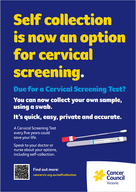
Display posters in shared workplace spaces, such as lunchrooms and on the back of bathroom doors, to raise awareness and encourage conversations about cervical screening.
-
PosterSelf-collection cervical screening clinic posterpdf202 KB
-
PosterPreventing cervical cancer is in your hands poster
A4 poster to remind eligible Victorians to do their Cervical Screening Test when they are due.
pdf154 KB

Presentation for your cervical screening session
Cancer Council Victoria has developed a templated PowerPoint you can use to present at your session. If you would like to make suggestions, please contact our team: screening.engagement@cancervic.org.au.
Would you like support to deliver a cervical screening information session?
If your workplace would prefer support with delivering a cervical screening information session, you can contact the Multicultural Centre for Women’s Health (MCWH). Their experienced Bilingual Health Educators (BHEs) can deliver culturally appropriate information sessions to help staff learn about cervical screening, understand their screening options and make informed decisions about their health.
To enquire about arranging a session at your workplace, please contact MCWH at programs@mcwh.com.au.
Support access to cervical screening
Increasing awareness and confidence in cervical screening will encourage more eligible people in the community to book in a Cervical Screening Test.
Using the information below, you can support people in the workplace to book in their next test.
Find a provider that suits your needs
Use Cancer Council Victoria's free Cervical Screening Directory to find and book a cervical screening appointment at a location that suits you. The directory also allows you to search for providers who speak a range of languages.
Telehealth cervical screening service
People who find it difficult to attend a doctor's clinic may be able to access cervical screening through a telehealth appointment and complete a self-collected Cervical Screening Test at home. Telehealth can help overcome barriers such as distance, transport, time constraints, mobility issues, or access to a regular healthcare provider.
Sexual Health Victoria offers free self-collection Cervical Screening Test appointments via telehealth for all women and people with a cervix across Victoria.
The Women's Health Virtual Clinic (run by Each) offers free Cervical Screening Test consultations via telehealth. The service is available to women, girls and gender-diverse people of all ages across Victoria. No Medicare card or referral is required, and free interpreter services are available. You can access this service through the Virtual Women's Health Clinic.
When supporting community members to book a Cervical Screening Test, check whether they have a Medicare card. People with a green or blue Medicare card can generally access cervical screening through Medicare, often at no cost if the healthcare provider bulk bills. If someone does not have Medicare, they may still be able to access cervical screening. Encourage them to contact a local community health service, sexual health clinic or GP to ask about available services and any costs. It is important to check eligibility and fees before booking, so everyone can be supported to access screening regardless of their Medicare status.
Bring cervical screening to your workplace
Some staff may find it difficult to attend cervical screening appointments due to work schedules, family responsibilities or other commitments.
Your workplace can help make screening more accessible by arranging for a nurse or healthcare professional to offer cervical screening onsite. With self-collection, eligible staff can collect their own sample in a private space at work.
Interested in offering cervical screening at your workplace?
Start with the Community Outreach Toolkit for Cervical Screening
This toolkit provides practical guidance and resources to help you plan and organise cervical screening activities at your workplace.
View the Community Outreach Toolkit
Is cervical screening right for your workplace?
Use the checklist to help determine whether your workplace is well placed to offer cervical screening education and navigation.
Understanding Cervical Screening Test results and supporting follow up care
Cancer Council Victoria has developed educational resources to help people understand their cervical screening results and any recommended follow-up care, including colposcopy referrals.
Case study: Tegan

We often hear that real case studies are very inspiring and can motivate people to screen. You can share, read or email Tegan’s story.
After receiving an abnormal Cervical Screening Test result in her 20s, Tegan is encouraging other eligible people to try out the 'easy and private' self-collection option.